How Multi-Channel Campaigns Generate More Qualified Leads
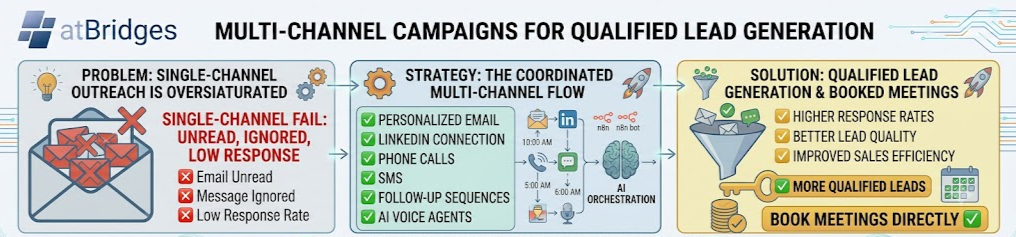
Generating leads has become increasingly challenging. Prospects receive hundreds of emails, countless LinkedIn requests, cold calls, and marketing messages every week. Relying on a single communication channel often results in low response rates and missed opportunities.
Modern businesses are shifting to multi-channel campaigns to engage prospects across multiple touchpoints. By combining email, LinkedIn, phone calls, SMS, and other communication channels into a coordinated outreach strategy, companies can increase visibility, build trust, and convert more qualified leads.
What Is a Multi-Channel Campaign?
A multi-channel campaign is an outreach strategy that communicates with potential customers through multiple channels instead of relying on just one.
Common channels include:
- Email outreach
- LinkedIn connection requests and messaging
- Phone calls
- SMS
- Website chat
- Follow-up sequences
- AI voice agents
Rather than sending a single email and waiting for a response, businesses guide prospects through a structured sequence of personalized interactions.
Why Single-Channel Outreach No Longer Works
Many organizations still depend entirely on cold email or LinkedIn messaging. While these channels remain valuable, response rates continue to decline because prospects are overwhelmed with generic outreach.
Common challenges include:
Common challenges include:
- Emails going unread
- LinkedIn messages being ignored
- Poor follow-up consistency
- Manual outreach taking too much time
- Lack of visibility into prospect engagement
A multi-channel approach solves these problems by creating multiple opportunities for meaningful engagement.
Benefits of Multi-Channel Lead Generation
Higher Response Rates
When prospects encounter your brand across multiple channels, they become more familiar with your business. This familiarity increases the likelihood of a response.
Better Lead Quality
Prospects who engage through multiple touchpoints often show stronger buying intent, allowing sales teams to focus on qualified opportunities.
Personalized Customer Experience
Different prospects prefer different communication methods. Some respond to email, while others prefer LinkedIn or a phone conversation. Multi-channel campaigns meet customers where they are most comfortable.
Consistent Follow-Ups
Automation ensures every lead receives timely follow-ups without requiring manual effort, reducing the chances of missed opportunities.
Improved Sales Efficiency
Sales representatives spend less time performing repetitive tasks and more time engaging with prospects who are genuinely interested.
Typical Multi-Channel Campaign Flow
A successful campaign often follows a structured sequence:
- Identify the ideal customer profile.
- Build a targeted prospect list.
- Send a personalized email.
- Connect on LinkedIn.
- Share relevant content or insights.
- Schedule automated follow-up emails.
- Trigger AI-powered phone outreach for engaged prospects.
- Book meetings directly into the sales calendar.
- Continue nurturing leads until they are sales-ready.
This coordinated process keeps prospects engaged without overwhelming them.
The Role of AI in Campaign Management
Artificial intelligence is transforming outbound sales by automating repetitive tasks while maintaining personalization.
AI can help teams:
- Generate personalized outreach messages.
- Research prospects automatically.
- Score leads based on engagement.
- Schedule follow-ups.
- Detect the best time to contact prospects.
- Summarize conversations.
- Book appointments automatically.
- Route qualified leads to sales representatives.
This allows businesses to scale outreach while maintaining a personalized experience.
Measuring Campaign Success
Tracking the right metrics helps optimize campaign performance over time.
Important metrics include:
Important metrics include:
- Open rate
- Reply rate
- Click-through rate
- Connection acceptance rate
- Meeting booking rate
- Conversion rate
- Cost per lead
- Qualified opportunities generated
- Revenue influenced
Regular analysis enables businesses to refine messaging, improve targeting, and maximize ROI.
Best Practices
To improve campaign performance:
- Personalize every message.
- Use verified contact information.
- Segment prospects by industry and role.
- Keep messaging concise and relevant.
- Avoid excessive follow-ups.
- Test subject lines and messaging.
- Monitor engagement across every channel.
- Optimize campaigns continuously based on results.
Conclusion
Lead generation is no longer about sending more emails or making more cold calls. Success comes from engaging prospects through the right channels at the right time with relevant, personalized communication.
A well-planned multi-channel campaign enables businesses to reach more decision-makers, nurture relationships effectively, and convert qualified prospects into customers. By combining automation with personalization, organizations can build a scalable outreach process that consistently generates high-quality leads and supports long-term business growth.